College Planning Hub



Articles

July 31, 2026
College After Loss: When Grief, Family Responsibility, and Financial Aid Collide
After a parent dies, college decisions can become emotional, financial, and complex. Learn how grieving families can consider school, support, and next steps.
Continue

July 31, 2026
FAFSA After the Death of a Parent: Income, Inheritance, and Financial Aid After Loss
Learn how FAFSA, income, inheritance, assets, survivor benefits, and special circumstances may affect college financial aid after the death of a parent.
Continue

July 31, 2026
From Unthinkable to Achievable: College Funding Strategies for Widowed Clients
Help widowed clients navigate college funding after loss with strategies for financial aid, inherited assets, cash flow, and changing family priorities.
Continue

July 31, 2026
If a Grieving Student Takes Time Off From College: What Families Should Know First
Learn what widowed families should know before a grieving student reduces credits, withdraws, takes leave, transfers, or pauses college after loss.
Continue

July 31, 2026
Staying in College After the Death of a Parent: How to Protect Your Student and Their Future
Learn how grieving students can stay in college after the death of a parent with support, flexibility, campus resources, and a plan to protect their future.
Continue
Helpful websites and publications
Federal Student Aid and Financial Aid Resources
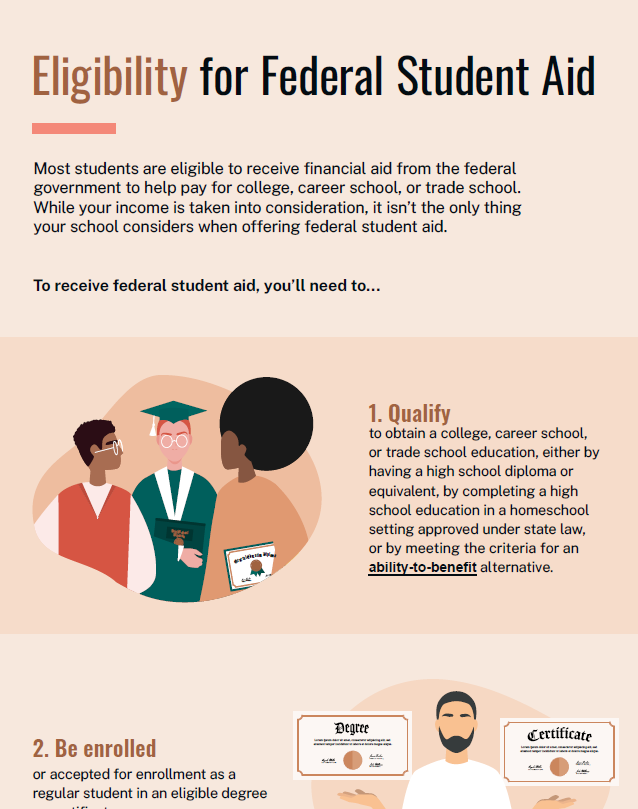
Federal Student Aid is the U.S. Department of Education office that manages federal grants, loans, work-study, FAFSA, and other financial aid programs that help students pay for college or career school.
FAFSA® Application is the official federal application students and families use to apply for financial aid for college, career school, or graduate school.
Federal Student Aid: Filling Out the FAFSA® Form explains how to complete the FAFSA, including what information families need to provide and how marital status, income, and contributors are handled.
Federal Student Aid: Student Loan Repayment explains how federal student loan repayment works, including repayment plans, grace periods, and what happens after a student leaves school or drops below half-time enrollment.
Federal Student Aid: Grace Period FAQ explains that the length of a student loan grace period is typically six months, although it can vary depending on the type of loan.
Federal Student Aid Handbook is the technical reference schools use for federal student aid rules, including FAFSA, Pell Grants, withdrawals, satisfactory academic progress, professional judgment, and Return of Title IV funds.
Federal Student Aid Handbook: Special Cases / Professional Judgment explains how financial aid administrators may review special circumstances when a family’s FAFSA no longer reflects their current financial reality.
Federal Student Aid Handbook: FAFSA Assets explains how different assets may be reported on FAFSA, including cash, savings, investments, 529 plans, trusts, UGMA/UTMA accounts, and excluded assets such as retirement plans and the family’s principal residence.
College Board CSS Profile is a financial aid application used by some colleges and scholarship programs to award non-federal institutional aid.
College Navigator is a free U.S. Department of Education tool that helps families compare colleges, costs, graduation rates, financial aid, programs, and other school information.
Grief, Student Support, and Mental Health Resources
Coalition to Support Grieving Students provides school-focused resources to help educators and communities support grieving students.
Coalition to Support Grieving Students: Impact on Learning explains how grief can affect learning, including concentration, memory, sleep, anxiety, sadness, and temporary academic challenges after a death.
National Center for School Crisis and Bereavement helps schools support students through crisis and loss and is directed by David J. Schonfeld, MD, FAAP.
National Center for School Crisis and Bereavement: Teacher Training Modules offers free training materials for school professionals supporting grieving students.
American Academy of Pediatrics: Supporting the Grieving Child and Family is a 2024 clinical report offering practical guidance for talking with and supporting grieving children and families.
PubMed: Supporting the Grieving Child and Family provides the PubMed record for the American Academy of Pediatrics clinical report on supporting grieving children and families.
Research on Bereaved College Students
Help-Seeking Behavior in Bereaved University and College Students is a peer-reviewed 2022 study examining bereaved students’ grief, mental-health distress, personal growth, support needs, and barriers to seeking help.
Well-Being and Academic Experiences in Bereaved University Students is a peer-reviewed study of bereaved university students that found many students reported worse academic experiences after bereavement.
University of Western Australia: Well-Being and Academic Experiences in Bereaved University Students provides an accessible university repository record for the same study.
Differences in University Experiences, Support Seeking, and Mental Well-Being According to Bereavement Status is a peer-reviewed study comparing bereaved and non-bereaved university students’ experiences, support seeking, and mental well-being.
College Planning and Cost Resources
Taming the High Cost of College is Brad Baldridge’s college planning resource site, offering guidance for families on planning, saving, paying for college, financial aid, scholarships, and reducing college costs.
About Brad Baldridge provides background on Brad Baldridge, CFP®, including his experience helping families plan and pay for college.
Taming the High Cost of College Resources provides free tools and resources related to college costs, scholarships, financial aid, and planning.
Saving for College provides consumer education about 529 plans, financial aid, scholarships, student loans, and college savings strategies.
Saving for College: Does a 529 Plan Affect Financial Aid? explains how 529 plans and certain student-owned assets may affect financial aid eligibility.